
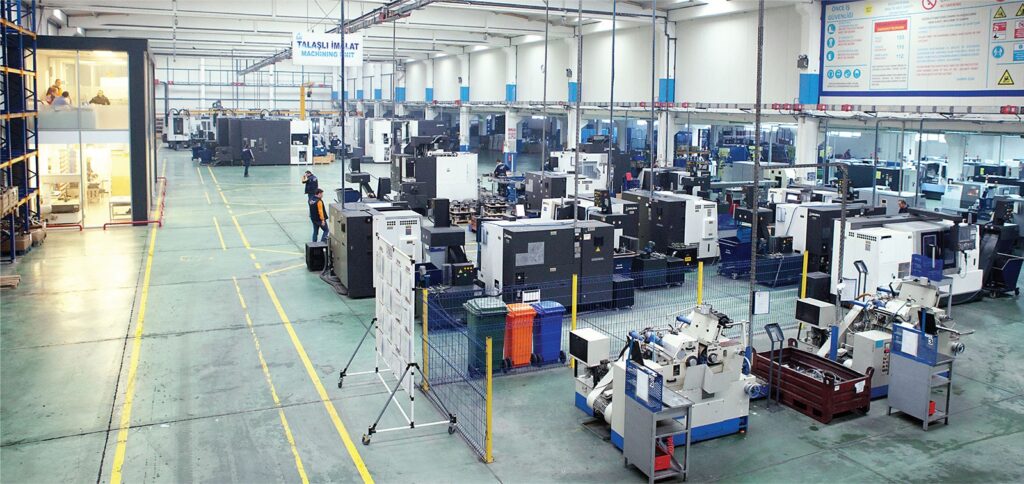
What is CNC Precision Machining?
CNC (Computer Numerical Control) Precision Machining is a manufacturing process that uses computer-controlled machines to remove material from a solid workpiece with extremely high accuracy and repeatability. It’s widely used to produce complex parts with tight tolerances from various materials, including metals and plastics.
Common CNC Machines
| Machine Type | Purpose |
|---|---|
| CNC Milling | Rotating cutting tools to remove material (3 to 5 axes) |
| CNC Turning | Spins the workpiece to cut circular features |
| CNC Swiss Turning | Ultra-precise machining of small parts (medical, watchmaking) |
| CNC EDM | Electrical discharge machining for intricate details |
| 5-Axis CNC | Simultaneous movement in 5 axes for complex geometries |
Typical Tolerances
Precision up to ±0.005 mm (±5 microns) is common
Surface finish can reach Ra 0.2–0.8 µm depending on the process
For ultra-precision parts, tolerances can go down to ±0.001 mm
Materials That Can Be Machined
Metals: Aluminum, stainless steel, titanium, brass, copper, tool steel
Plastics: POM (Delrin), PTFE (Teflon), Nylon, ABS, Polycarbonate
Composites and ceramics (with specialized tools)
Applications of CNC Precision Machining
Aerospace: Engine parts, structural components
Automotive: Transmission housings, fuel system components
Medical: Surgical instruments, orthopedic implants
Electronics: Heat sinks, enclosures, connectors
Defense & Military: Weapon components, radar systems
Process Overview
CAD Design – 3D digital model is created
CAM Programming – Toolpaths and cutting operations are planned
Workpiece Setup – Material is clamped in the machine
Machining – CNC machine executes precise operations
Inspection – Quality control using CMM or micrometers
Key Advantages
High precision and repeatability
Minimal human error
Efficient for both prototyping and production
Supports complex geometries
Wide material compatibility
High-quality surface finish
Typical Machining Operations
Milling
Turning
Drilling
Tapping
Threading
Engraving
